
The Property Manager's Guide to Commercial HVAC Maintenance
Minimize downtime and tenant complaints with a proactive maintenance schedule for rooftops units and chillers.
For property managers in Houston's competitive commercial real estate market, maintaining reliable HVAC systems isn't just about tenant comfort, it's about protecting your investment, minimizing operational costs, and ensuring regulatory compliance. A single system failure can result in thousands of dollars in lost revenue, tenant turnover, and emergency repair expenses.
With extensive experience serving Houston's commercial sector, we've developed this comprehensive guide to help property managers implement effective maintenance programs that maximize uptime and minimize costs.
Understanding Commercial HVAC Systems: Scale and Complexity
Commercial HVAC systems differ significantly from residential applications in scale, complexity, and operational requirements.
Common Commercial System Types:
- Rooftop Units (RTUs): Most common in small to medium commercial buildings, 5-50 tons capacity
- Split Systems: Similar to residential but larger scale, often with multiple indoor units
- Chillers: Large-scale cooling for office buildings, hospitals, and industrial facilities
- VAV Systems: Variable air volume systems for zoned temperature control
- Building Automation Systems (BAS): Computerized control and monitoring
Houston Consideration: Our hot, humid climate demands robust systems capable of handling high sensible and latent loads year-round.
The Business Case for Preventive Maintenance
While reactive maintenance seems cheaper initially, preventive programs deliver substantial ROI:
Financial Benefits:
- Reduced Downtime: 95%+ uptime vs. 85% with reactive maintenance
- Energy Savings: 15-25% reduction in utility costs through optimized performance
- Extended Equipment Life: 2-3x longer lifespan with proper maintenance
- Lower Repair Costs: 30-50% reduction in emergency service expenses
- Tenant Retention: Reliable comfort reduces turnover and vacancy rates
ROI Calculation: For a $50,000 HVAC system, preventive maintenance typically pays for itself within 2-3 years while extending system life by 5-10 years.
Quarterly Maintenance Schedule: The Foundation
Structured quarterly inspections form the backbone of effective commercial HVAC maintenance.
Q1 (Jan-Mar) - Winter Transition:
- Complete system inspection and cleaning
- Filter replacement and inventory check
- Heating system performance verification
- Calibration of controls and sensors
- Drain pan and condensate system cleaning
Q2 (Apr-Jun) - Pre-Summer Preparation:
- Cooling system capacity testing
- Refrigerant level verification
- Electrical component inspection
- Outdoor unit maintenance and clearance check
- Economizer and fresh air damper function test
Q3 (Jul-Sep) - Peak Summer Monitoring:
- Performance monitoring during peak loads
- Filter changes and air quality checks
- Condensate system monitoring
- Temperature and humidity control verification
- Emergency backup system testing
Q4 (Oct-Dec) - Winter Preparation:
- Heating system efficiency testing
- Indoor air quality assessment
- Building pressurization checks
- Annual performance report compilation
- Budget planning for upcoming year
Monthly Tasks: Daily Operations Oversight
Monthly checks ensure systems remain in optimal condition between major services.
Monthly Maintenance Checklist:
- Filter Inspection: Check pressure drops and replace as needed
- Belt Tension: Verify drive belts are properly tensioned
- Visual Inspection: Check for unusual noises, vibrations, or leaks
- Performance Logs: Record operating parameters and energy usage
- Tenant Feedback: Monitor comfort complaints and response times
Rooftop Unit Maintenance: Houston's Most Common System
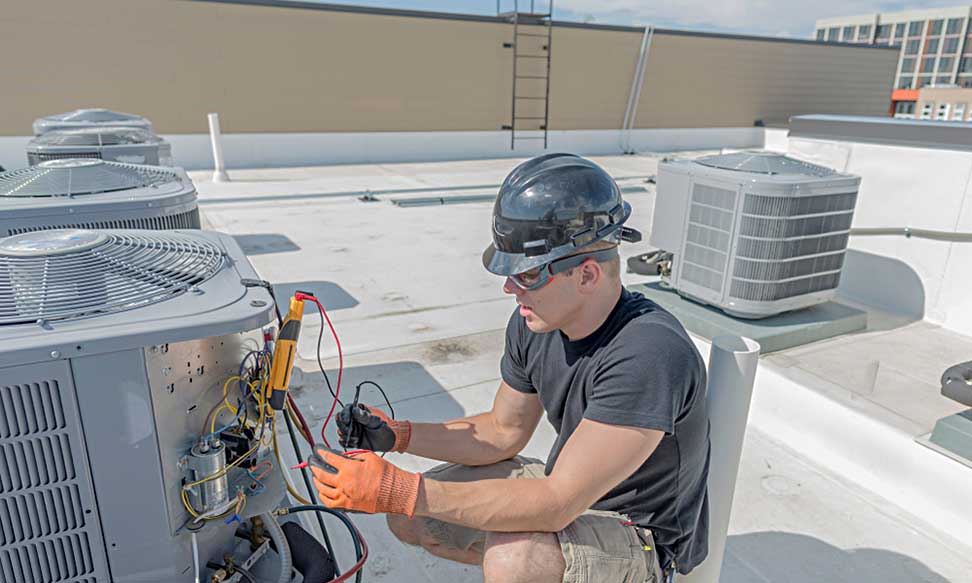
Rooftop units (RTUs) represent 70% of Houston commercial HVAC installations. Their exposed location demands specific maintenance protocols.
RTU-Specific Maintenance:
- Coil Cleaning: Remove dirt, pollen, and construction debris bi-annually
- Drainage System: Clear condensate drains monthly to prevent overflow
- Weather Protection: Inspect seals and weather stripping annually
- Access Prevention: Install bird screens and secure access panels
- Elevation Check: Ensure proper roof curb mounting and level
Houston Challenge: Our frequent rain and humidity accelerate corrosion and microbial growth on rooftop equipment.
Chiller System Maintenance: High-Stakes Cooling
Large chillers are critical systems requiring specialized maintenance and monitoring.
Chiller Maintenance Priorities:
- Refrigerant Analysis: Annual testing for purity and leak detection
- Tube Cleaning: Chemical cleaning every 3-5 years to maintain efficiency
- Water Treatment: Continuous monitoring of condenser water quality
- Performance Testing: Annual capacity and efficiency verification
- Vibration Analysis: Regular monitoring for bearing wear
Critical Systems Note: Chiller failures can cost $10,000+ per hour in lost productivity for large buildings.
Building Automation Systems: The Digital Backbone
Modern commercial buildings rely on BAS for efficient operation and monitoring.
BAS Maintenance Essentials:
- Software Updates: Keep control systems current with manufacturer releases
- Sensor Calibration: Verify accuracy of temperature, pressure, and humidity sensors
- Network Security: Implement cybersecurity measures and regular updates
- Backup Systems: Test redundant controls and emergency operations
- Data Analysis: Review performance trends and energy usage patterns
Regulatory Compliance: Legal Requirements
Houston property managers must comply with multiple regulatory requirements:
Key Compliance Areas:
- EPA Refrigerant Regulations: Proper handling and leak prevention
- ASHRAE Standards: Indoor air quality and ventilation requirements
- Local Building Codes: Houston-specific requirements for commercial properties
- Insurance Requirements: Maintenance documentation for coverage
- Energy Codes: IECC compliance for new construction and major renovations
Documentation Critical: Maintain detailed records of all maintenance activities for regulatory compliance and insurance purposes.
Indoor Air Quality Management
IAQ directly impacts tenant satisfaction, productivity, and health.
IAQ Maintenance Strategies:
- Filtration Upgrades: High-efficiency filters for particulate removal
- Ventilation Verification: Ensure proper outdoor air intake
- Humidity Control: Maintain optimal moisture levels
- Mold Prevention: Regular inspection of cooling coils and drain pans
- Air Testing: Periodic IAQ monitoring and reporting
Emergency Preparedness and Response
Even with excellent maintenance, emergencies can occur. Preparedness minimizes impact.
Emergency Protocols:
- 24/7 Monitoring: Remote system monitoring with alerts
- Emergency Contacts: Established relationships with service providers
- Backup Systems: Redundant equipment for critical operations
- Tenant Communication: Clear protocols for occupant notifications
- Recovery Planning: Procedures for system restoration
Performance Monitoring and Analytics
Data-driven maintenance decisions optimize performance and reduce costs.
Key Performance Indicators:
- Energy Usage: kWh/ton-hour for cooling efficiency
- Uptime Percentage: System availability metrics
- Maintenance Costs: Per square foot operating expenses
- Tenant Satisfaction: Comfort complaint tracking
- ROI Metrics: Return on maintenance investment
Vendor Management and Contracts
Selecting and managing HVAC service providers is crucial for success.
Vendor Selection Criteria:
- Certifications: EPA Universal, NATE certification, manufacturer training
- Response Times: Guaranteed emergency response SLAs
- Documentation: Detailed reporting and compliance records
- Technology: Advanced diagnostic tools and remote monitoring
- References: Performance history with similar properties
Budget Planning and Cost Control
Effective budgeting ensures maintenance programs remain sustainable.
Budgeting Strategies:
- Annual Planning: 12-month maintenance budget with quarterly reviews
- Reserve Funds: Emergency repair contingency (5-10% of system value)
- Cost Tracking: Detailed expense monitoring and variance analysis
- Benchmarking: Compare costs against industry standards
- Energy Incentives: Leverage utility rebates for efficiency upgrades
Technology Integration: Smart Building Solutions
Modern technology enhances maintenance effectiveness and reduces costs.
Smart Technologies:
- Predictive Analytics: AI-driven failure prediction
- IoT Sensors: Real-time equipment monitoring
- Mobile Apps: Remote system control and diagnostics
- Automated Reporting: Digital maintenance documentation
- Energy Management: Automated optimization systems
Getting Started: Implementation Roadmap
Transitioning to a comprehensive maintenance program requires systematic implementation.
Implementation Steps:
- Assessment: Complete facility audit and system inventory
- Planning: Develop customized maintenance schedule
- Budgeting: Establish annual maintenance budget
- Vendor Selection: Choose qualified service providers
- Training: Educate on-site personnel on basic monitoring
- Implementation: Begin scheduled maintenance program
- Monitoring: Track performance and adjust as needed
Partner with HVAC Repairs of Houston
Maximize your commercial HVAC investment with our comprehensive maintenance programs designed specifically for Houston property managers.
Our Commercial Services Include:
- Customized preventive maintenance schedules
- 24/7 emergency response and monitoring
- Energy efficiency optimization
- Regulatory compliance assistance
- Detailed reporting and analytics
- Priority service guarantees
Call to Action: Don't let HVAC issues impact your property's performance. Contact our commercial division today at (281) 555-HVAC for a comprehensive maintenance assessment and customized service plan.
Reliable systems drive successful properties. Invest in maintenance today.
Written by Commercial Lead
Commercial division leader at HVAC Repairs of Houston specializing in large-scale HVAC systems, building automation, and regulatory compliance.